As is true everywhere, Puerto Rico has numerous cultural icons revered by both those living on the island and those pining for it from places far away. Among the icons are the guitarlike cuatro; lelolai folk music; foods such as tostones (fried green plantains) and a soupy stew known as asopao; wide-brimmed straw pava hats; and the casa jíbara.
The casa jíbara was the traditional house of Puerto Rico’s jíbaros, mountain-dwelling peasant farmers known for self-sufficiency and a strong connection to the land. They have become a beloved symbol of the island’s national identity and its Taino Indian, Spanish, and African heritage.
Typically, the homes were small cottages patterned in part on the Tainos’ round wood-and-thatch structures known as bohíos. The houses rose on stilts, which protected against flooding, kept out varmints, and allowed cool air to flow underneath. Wooden planks hewn from local trees formed the walls and shuttered windows. The roofs, pitched to handle the heavy tropical rains, were originally made of thatch and, later, of corrugated zinc, which sounds like a snare drum in the rain. An open covered front porch hosted the family’s social life. Modernized versions of these homes still exist.
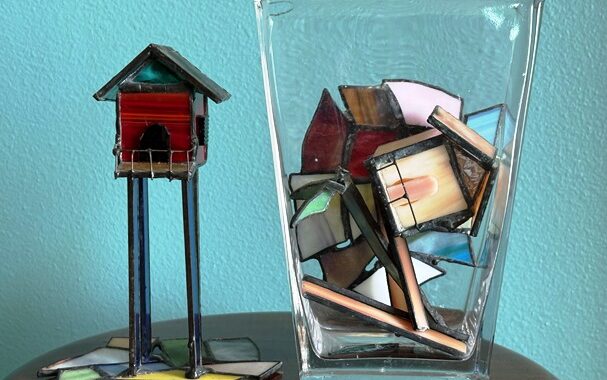
One of my prized possessions in Puerto Rico was a stylized jíbaro house made of colorful stained glass. It lasted until the salt air of my coastal home corroded the metal bordering the glass, and the house collapsed. Before we left the island, I bought another one. Today they sit side by side in my kitchen, and I title the pair ‘Before and After the Hurricane.’ The newer one has become an emissary of sorts, featured in several social media posts promoting Under the Tree Ferns, and it makes a cameo appearance in the book.