Years ago, when I taught the novel Wide Sargasso Sea by Jean Rhys for a university literature course in Puerto Rico, I came upon this quote by Rhys:
“All of writing is a huge lake. There are great rivers that feed the lake, like Tolstoy or Dostoyevsky. And then there are mere trickles, like Jean Rhys. All that matters is feeding the lake. I don’t matter. The lake matters. You must keep feeding the lake.”
The quote has stuck with me.
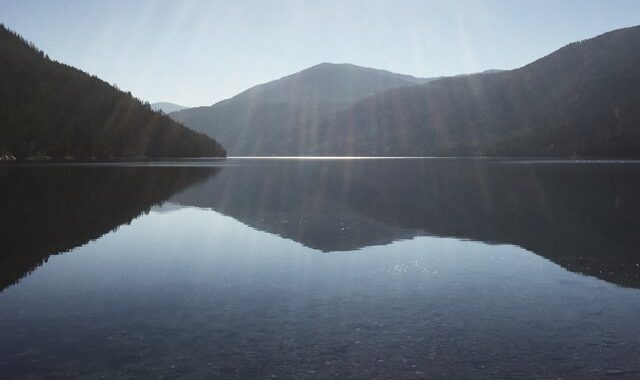
It comes to mind more often here in eastern Washington, when I’m seated, kayak at rest, in the middle of one of our nearby lakes. The lake might be still as glass or rippling under a light breeze; populated by ducks in formation or turtles sunning on logs; bordered by pine-covered hills or vertical cliffs; set in a gently sloping earth basin or carved out of basalt rock during a cataclysmic flood.
These lakes don’t survive without water. It arrives through rainfall, snow melt, rivers, underground springs, or creeks that wind through marshland in spring and dry up under the summer heat. Whatever the source, I’m grateful, and I agree with Rhys. Lakes must endure.
The one she envisions is a lake of words, strung together into paragraphs, poems, stories, and books—millions of books, spanning countries and centuries. Each book is less than a trickle, yet the lake is immense.
My book, my first novel, will add a drop or two, scarcely disturbing the surface of the word-lake. That thought is humbling, but also liberating. The book won’t change the world or make me rich and famous. It doesn’t need to. All it needs to do is feed the lake.
[photo Sullivan Lake, WA]
7/22/2025