Author’s note: To get the most out of this story, I recommend you first read the previous blog about the place. Thanks!
One morning, Enrique’s mother handed him a bota, a wineskin made from goat hide, and told him to go to the cave and fill it with wine. “Your father and brother will be spending the night in the olive grove. I’ve prepared a basket of cheeses, ham, olives, and figs, but there’s no wine in the house.”
Enrique didn’t want to go. His uncle had brought him pieces of parchment the night before, and he was sketching the outline of a cat sleeping in the house’s small inner courtyard. The cat would probably be gone by the time he returned, and even if it wasn’t, the light would be all wrong. But he couldn’t say no.
With a sigh, he took the bota and plodded to the front door. “Enrique, move. The men will be leaving soon. None of your daydreaming. Go!”
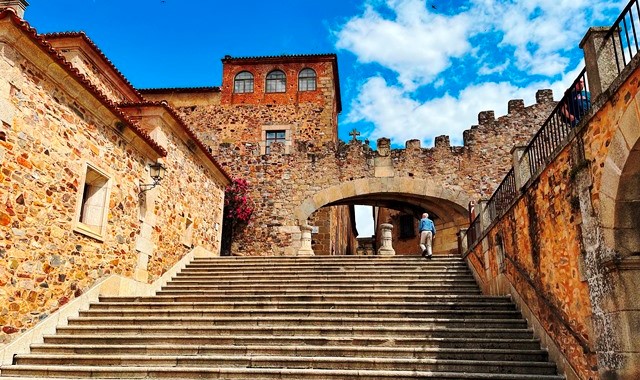
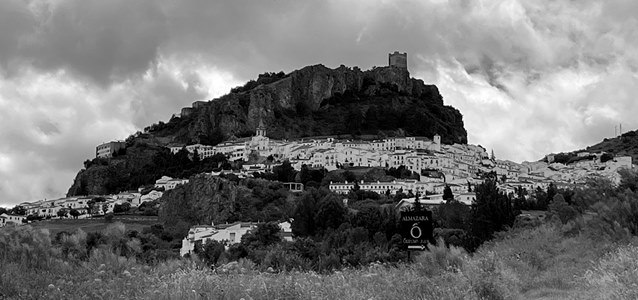
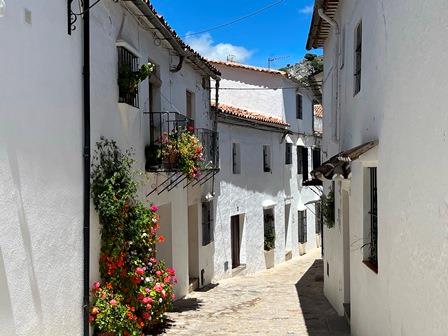
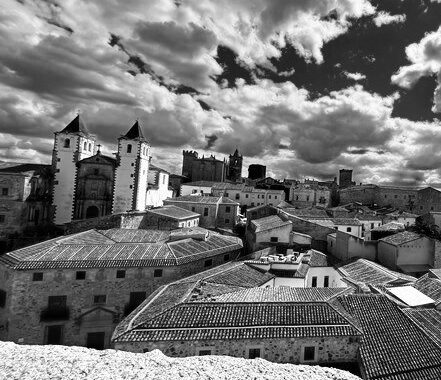
He pulled open the heavy wooden door, slipped out, and closed it. His hand stroked the whitewashed wall as he made his way in the direction of the cave. His house lay just outside the massive wall that encircled the city of Cáceres. It was sturdy, with a red tile roof, comfortable for his parents, his older brother and sister, and himself. Though it didn’t compare with the stone towers and palaces crammed within the city walls, it was nicer than most homes in the area.
His brother was learning the business of cultivating olive trees, harvesting the olives, and processing them into oil. He would follow in his father’s footsteps. His sister stayed by his mother’s side, learning to cook and clean and sew, skills that would make her a good wife. Enrique was left to his own devices, for the moment, which made him the obvious choice for any errands that needed to be done. What he wanted to do when he got older was go to school, but his father paid no attention to that idea.
The wine was stored in large earthenware jugs called tinajas, in a cave on the edge of the olive grove. The day was hot, the sun intense, and Enrique wished he’d remembered to wear a hat. He looked back at the rooftops and towers of the city. A stork nest crowned one tower. He kept an eye on it. Every day the mother stork would fly away and return with bits of food for the chicks. He wished he could fly like that. He might take off and never return. If he wanted.
A half hour walk took him to the cave, a long, low cavity in a small hill of rocks. Here the family stored, in addition to the wine, grains, dried meats, and the paste that remained after the crushed olives were strained into oil. The cave was long and narrow. The wine tinajas abutted the back wall, where light scarcely reached, and he usually had to fill the botas mainly by sound and touch. Today, however, the sun was in just the right position in the sky to shine its rays into the back crevasses. He easily walked in, opened the plug of one jug, and began to fill the bota. For the first time, he noticed drawings above the tinajas, and when he finished his task, he examined them. They were outlines of hands, dozens of hands, painted in earthen colors. He placed his hand in one of them: The outline was much larger than that of his hand. He wondered at the primitive but whimsical art.
In the following weeks, Enrique volunteered for any task that took him to the cave, and he made sure to go when the light would shine into the back of the cave. The paintings intrigued him: Who drew them? What did they mean? How old were they? He told no one about his find.
One day he was studying the hands and didn’t hear his brother come into the cave. “What are you looking at?” his brother asked. “Didn’t Mother tell you to return home quickly?”
Enrique wished he could hide the hands, but it was too late. “I just noticed these drawings on the wall. I wonder who made them.”
His brother glanced at them impatiently, then turned away. “Someone with too much time to waste. Like you. Get going.”
Several months later, the Angel of Death struck the region. Most people in Cáceres became sick, and many died. One of the dead was Enrique’s sister. After Death passed, he helped his father and brother whitewash the house, inside and out, to purify it. The next time he approached the cave to fill a bota with wine, he froze in horror. White rimmed the cave. He stepped forward slowly, his heart pounding, and peered inside. The interior had been whitewashed. The hands were gone.
He ran to his brother in the olive grove. “You destroyed the paintings!” he screamed at him.
His brother eyed him as if he’d gone mad. “What’s wrong with you? There was extra whitewash, and I thought it would be good to clean the place where we store our foods.” He shrugged. “So? The cave looks better now without those scribbles.”