Many of the scientists I knew who worked at El Yunque National Forest in Puerto Rico spoke with reverence about the Everglades of southern Florida, one of the world’s premier sub-tropical ecosystems. They also spoke with alarm as human development in the region expanded, shrinking the ecosystem and reducing its water supply. Recently, I decided to make one of my life-in-the-time-of-coronavirus virtual visits to Everglades National Park. Most surprisingly, I learned that my original vision – a monotonous expanse of low-lying scrub and meandering waterways — was inaccurate. In reality, there are several very distinct habitats found in the Everglades.

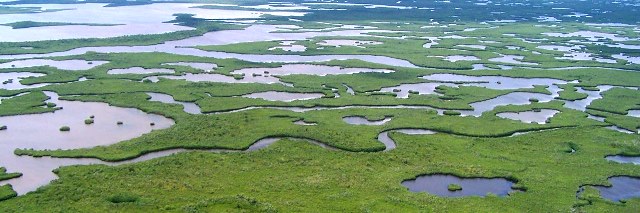
Grassy marshland, courtesy National Park Service
What’s in a name?
When early explorers first viewed this region long ago, they were impressed with its vast fields of marshland grass. As a result, they combined the word ‘ever,’ a shortened form of ‘forever,’ with ‘glade,’ an old-fashioned English word for a grassy open place. The name stuck. Of course, the native Americans who lived here had their own name — Pa-hay-Okee, which translates into ‘grassy waters.’ The grasses are found primarily in freshwater sloughs and swampy prairies. The word ‘slough,’ meaning a marshy wetland, rhymes either with ‘cow’ or ‘stew,’ depending on your preference. The water for the wetlands slowly meanders south from Lake Okeechobee, which is exceedingly large, approximately 720 square miles, and exceptionally shallow, with an average depth of nine feet. The most prominent grass, sawgrass, is actually a sedge, with sawlike teeth along the blades. There are also dozens of species of true grasses, and the height of the grasses rarely reach four feet.
Standing tall(er):

Bald cypress trees, courtesy Flickr
Trees also grow in the Everglades, on patches of land that suit their ecological fancies, primarily slightly higher and dryer limestone. Here, straggly pines tower over saw palmettos, which remind me of palm trees without trunks. The fan-shaped leaves have sawlike edges, and an extract from the palm is touted as a panacea for prostate problems. You’ll also find more majestic hardwoods, such as mahogany, gumbo limbo, oak, and maple. Perhaps most haunting of the tall trees here are the cypress. Conifers that shed their leaves, cypress are water-tolerant, found along the Everglade waterways and marshy craterlike formations. With their skirtlike buttresses dropping into inky water, they resemble ladies on a stroll.
Walking into the sea:

Mangroves, courtesy National Park Service
Along the coastal tip of southern Florida, mangroves mark the first line of defense between the often-turbulent ocean and inland freshwater. Three hardy species of mangrove – red, black, and white – tolerate not only water but also salt and wind. Their stilt-like roots form intricate networks that anchor the mangroves to the ground, and ‘walk’ by growing new roots into the sea. Beyond them, between the coast and the Florida Keys, lies Florida Bay. Comprising almost a third of the national park, these shallow waters make for excellent fishing, but, like all of the Everglades, suffer from a myriad of ecological problems.
Getting around:
The Everglades National Park is huge, 1.5 million acres, and much of it is remote and inaccessible. Getting around is a challenge. No highway crisscrosses the entire park, and you gain access through three separate entrances hours apart. The ones near Miami (Shark Valley) and Homestead (Main Entrance) lead you into the heart of the park while the third in Everglades City enables you to explore the mangroves and Thousand Islands of Florida’s Gulf Coast. Here are nature trails, hiking and biking trails, boat and tram tours, canoeing and kayaking waterways, campgrounds—all of which can introduce you to the creatures of the Everglades – manatees, sea turtles, panthers, pythons, alligators, and a multitude of fish and birds. But beware – it’s best to go in winter, when the temperatures are relatively cool and the mosquitoes at bay.
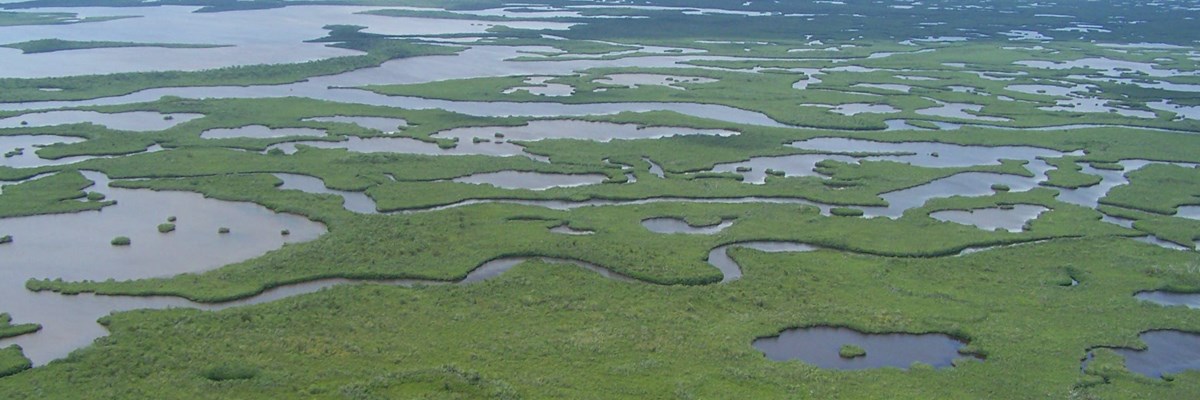
Courtesy National Park Service
Next week — the story.