Author’s note: To get the most out of this story, I recommend you first read the previous blog about the place. Thanks!
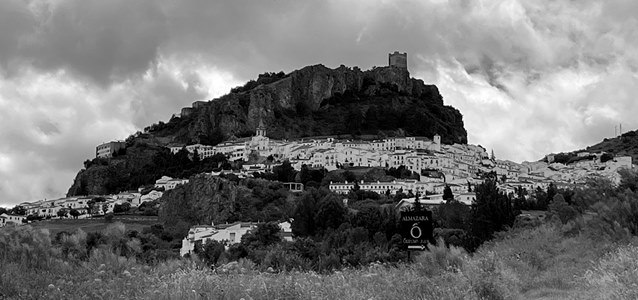
Maria Georgiou woke to the sound of rain on the roof. Easing her feet into slippers, she wrapped a shawl around her nightgown to protect against the bone-chilling early-morning cold. Hobbling across the room, she reached a window, opened its blue shutters, and looked out on a leaden sky and rain-soaked homes clustered on a hillside. In the distance below, the St. George Monastery could scarcely be seen through the fog, and the sea beyond had vanished entirely.
Not a good feast day.
For Maria as a child, the feast day for Hagio Arsenios, a saint from their own Paros Island, was the most important day of the year, more important even than her own feast day for the Virgin Mary. Her father’s first name was Arsenios, and on January 31, as his name-day dawned, people would pass by to wish him health and prosperity. Later, friends and family arrived at their house bearing gifts—bottles of wines and liquors, sweets, books, knitted socks and hats—and her family prepared a delicious spread of lamb and fish; potatoes and vegetable pies; stuffed tomatoes and grape leaves; and, for dessert, baklava and yoghurt with honey and walnuts. Music and dancing continued far into the night, and the next day everyone was permitted to sleep late.
Her father had been fortunate to be named for such an important saint. In the mid-1800s, Arsenios, a Greek monk, arrived on Paros Island. Here he became a priest and resided at the St. George Monastery, where he excelled as a Father Confessor and spiritual guide. He was well known for his good deeds, particularly to a young woman who had sinned and been cast aside by the nuns at the convent. Hagio Arsenios intervened, showing the same compassion as did the father of the Prodigal Son. Maria had never tired listening to her father tell that story.
She shrugged. The weather didn’t matter. Those festivities were long gone.
After a breakfast of coffee and crackers, she dressed and, putting on her winter coat, walked with a cane down a muddy path to the village’s lone market. On the way, she passed several homes, half of them abandoned. Would the village soon have no inhabitants, as some predicted? Only Maria and two neighbors kept up the tradition of white-washing houses at Eastertime, and their homes glistened white in the rain, out of place against the drab masonry and peeling doors of the others.
The feast-day celebration had stopped with the start of the war. For years tables of food were a taunting memory as the Nazis cut off supplies, starving many, her father included. After the war, Maria remained in the village, married, and raised two sons. The young no longer cared to fish or grow olives or tend sheep. Most left. One of her sons moved to Paris; the other emigrated to the United States, to the city of Boston. Both married women from their new homes, and neither had been back for years. “Air fare is too expensive for families,” they complained. They rarely sent her gifts of money, and their phone calls were few and far between. A decade ago her husband died, and Maria lived alone in the tiny, tidy house.
The market offered a few fruits and vegetables, dried fish and meats, and a scant supply of household items, laid out on blankets inside one of the abandoned homes. Maria entered the shop and paused in front of the vegetables. There were lovely purple eggplants and large red tomatoes. She opened her purse and counted the coins. Enough for an eggplant or a couple of tomatoes, not both.
Next to her, a woman clucked in disappointment. Dressed from head to toe in black, she had hunched shoulders and a prominent nose. Chira Papaioannou. The widow lived on the far side of the village. María had rarely spoken to her.
“Kaliméra,” she said.
The widow returned the greeting. She too stood in front of the vegetables with her purse open. Her eyes flitted from eggplants to tomatoes. “I don’t have enough for both,” she confided.
Which is when Maria had an epiphany. She touched the widow’s sleeve. “Today is the feast day of Hagio Arsenios of our own Paros. Long ago, it was a very special day for my family. I would like to remember the day, but, like you, I have few coins to spend. Perhaps we could join our coins—I’ll buy the tomatoes and you an eggplant—and we could bring the food back to my house and prepare a modest feast.”
The sparkle in the widow’s eyes and the width of her smile made Maria feel she had just suggested something grand.
“I have a neighbor,” the widow said shyly, “who lost her husband this past year. At night, I often hear her crying. Perhaps we could also ask her.”
Maria nodded energetically. “A wonderful idea.”
By early afternoon, a dozen elderly people—ten women and two men—arrived at Maria’s home. Each brought a small item to share—ground lamb, spinach, potatoes, squash, a bottle of ouzo, two bottles of retsina wine, a small orange cake with syrup. For hours, they cooked and drank, and ate and toasted new friends and departed family, and drank and sang and even danced as best they could, which wasn’t bad at all.
The next day, everyone gave themselves permission to sleep late.