Author’s note: To get the most out of this story, I recommend you first read the previous blog about the place. Thanks!
You pull open the shutters to get relief from the humid heat and look out on a view framed by banana fronds and lime trees in the foreground, backed by sweeps of forest and cliffs angling into deep blue sea. This is your new home, the third you’ve lived in since you arrived on Saba.
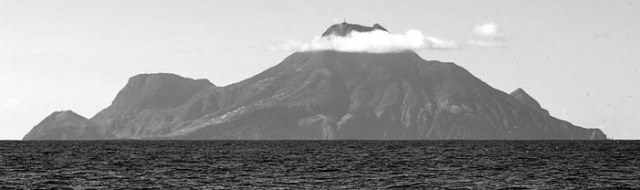
An alignment of mixed-bag events brought you to this tiny cone poking out of the Caribbean.
First, your girlfriend of many years decided it was time to move out, and on. You have to admit, her announcement smacked you in the gut. You had no idea she wasn’t content with the status quo.
Second, you came across a notice inviting visitors to apply for long-term visas to the island of Saba. With the pandemic, you had no chance of finding a new roommate, and you couldn’t possibly pay the rent for your Manhattan studio alone.
You looked Saba up in an old, tattered book bought in a dusty hole-in-the-wall bookshop. Touring the Jewels of the Caribbean. The author gave the island short shrift. Scarcely three miles in diameter. No beaches, steep terrain. Fewer than a thousand inhabitants, more women than men. A strange community of white natives. Neglected by the modern world.
It sounded perfect.
So you broke your lease, flew to St. Marteen, and gained a few gray hairs on a puddle jumper that narrowly avoided plunging into the water on Saba’s impossibly short runway. Followed by a dizzying taxi ride on a narrow road that snaked around precipitous hills and ever-farther-flung views on its way to the island capital. The Bottom, it was called, for the concave shape of the terrain.
It turned out your tour book was outdated. Saba’s population had doubled since then, electricity had arrived, and a medical school, of all things, had been established on the edge of town. After two weeks of discotheque music blaring into your bedroom at night, you moved to Windwardside. A tiny village of white bric-a-brac cottages sprawled across a mountain flank, it seemed far enough away from the medical school to afford peace and quiet.
Quiet it was, but the residents, many of them with pale wizened skin, wouldn’t give you a moment’s peace. They brought over food, shared bottles of spiced rum, introduced you to friends and relatives, regaled you with tales of island lore, and interrogated you about your own pre-Saban life. After two weeks of living under a microscope, you moved to Hell’s Gate.
As you look out the shutters of your new home – tiny, box-shaped, and wood-shingled – you see a rooster pecking in the soil next to the banana plant. Though only a smattering of people live here, there is an overabundance of poultry and livestock – chickens, roosters, goats, pigs, and the like. They are indifferent to the constraints of time and place. Roosters crowing, pigs oinking, goats bleating – you haven’t had a good night’s sleep since you moved in.
You lock the door of your new home and strike out on a barely perceptible path that parallels the northern reaches of the island. You’ve taken the path before, enjoying stunning views and no people, but that is not why you are here today. You remember an island tale about Mary’s Point, a village so remote, so inaccessible that residents lived out their entire lives there, never venturing beyond. As the years went by, the villagers died off, marriages occurred between ever fewer families, and their offspring suffered the results. One day, officials from The Bottom came and evacuated the entire village, for their own good.
But, you think, there may be something left of the village, and if there is, you can move there. What a joy that would be, bothered by no one, no noise except for the rustling of leaves.
When you arrive at what on the map appears to be Mary’s Point, you search the area. There are no abandoned homes, no outbuildings, only fragments of stone walls and a bottle or two half hidden in decaying leaves. Not enough to start a new life. Disappointed, you turn to retrace your steps back to Hell’s Gate.
But you can’t move. The air seems to have thickened, and you become inordinately tired. Noticing a log next to your feet, you sit down.
A figure approaches through the trees. A man of indeterminate age, with skin the color of ashes, a bulbous nose, cauliflower ears, and porcine eyes. His clothes seem to have been made from forest vines. He stops several feet away.
“Do you live here?” you ask. The words come out in a slow-motion croak.
The man stares at you with his tiny eyes. Slowly, his lips begin to move, jerkily, as though unaccustomed to use. “I be here a long, long time,” he says.
You look down. Vines tickle your ankles.
With a sudden stab of terror, you realize that you may be, too.