Author’s note: To most appreciate this story, first read the previous blog about the place. Thanks!
This true story is told by a fictional narrator.
“Stay away from the dirty hippies.”
Those were my mother’s words every time I left the mini-market our family owned on Matala Beach in Crete. Before the hippies came, in the sixties, the beach was a sleepy place. Nothing fancy, not like today. The locals would stop by to eat a fish meal in a small beachside café or relax under a spindly tree in the hot African breezes. Everyone would enjoy the view. A gentle curve of pale gray sand borders lead-blue water, with a limestone cliff in the foreground, shadowy mountains in the background, and, overhead, a low-lying fringe of clouds against a brilliant-blue sky. Even as a boy, I appreciated living in such a gorgeous place.
Our market had no air-conditioning, not even a cooler to store perishables. Fishermen would bring in their catches early in the morning—usually grouper or mullet, sometimes larger fish like tuna—and what we hadn’t sold, kept, or given away by afternoon, we fed to the stray cats. We also sold homemade bread and yogurt, and fruits and vegetables grown in the region—figs, pomegranates, eggplant, garlic, tomatoes. Whatever the local farmers brought us. My parents didn’t get rich off the market, but we did better than many.
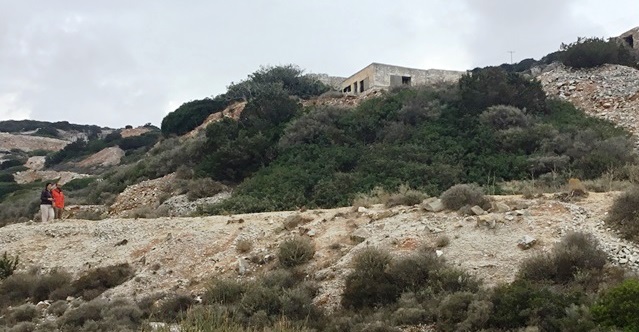
Then the hippies arrived, first one or two, then more. The limestone cliff rises out of the water on an angle. Etched in horizontal lines, it opens onto numerous caves. Over centuries, people had lived in the caves, but never like the hippies. Most of them came from faraway countries like Germany, Great Britain, Canada, and the United States. Rich countries, but they prided themselves on living like vagrants. They camped out in every nook and cranny the cliff offered, hordes of them in the peak summer months.
Every time the hippies entered our market, my mother would watch them with the eyes of an eagle. They were known for their sleight-of-hand in pocketing the foods that caught their fancy. Not all of them, of course, but enough that my mother cursed the entire lot. When they left, the smell of unwashed bodies lingered. It wasn’t pleasant.
I was just a boy back then. Unlike my mother, the hippies fascinated me. My friends and I would sneak as close as we could to the caves and observe. We saw lots of women’s breasts and occasionally entire nude bodies moving about at the cave entrances. The hippies smoked a lot, mostly marijuana, and seemed enamoured of our wines, particularly retsina. When their walking became loopy and their eyes unfocused, we knew they had taken pills with a variety of strange names. Sometimes they got in fights with each other but mostly they sat around and sang or talked. Or just vegetated.
One year, I think it was 1970, two women arrived at the caves. They looked cleaner than the other hippies and wore better clothes. At first, anyhow. One of them, with long, straight, light-brown hair and a long face, played a string instrument shaped like an hourglass and sang with a wonderful voice, high and sweet. The others crowded around her like she was some kind of celebrity.
One day she came into the market while I was stacking pomegranates and tomatoes into pyramids. I stopped working to stare at her. She smiled at me. Her upper teeth stuck out a bit when she did that, but I thought she was the most beautiful woman I’d ever seen. She said something, in English, gibberish to me. Then I caught my mother giving me the evil eye, and I returned to my stacking. As far as I know, she didn’t steal anything.
The woman spent a lot of time with another hippie, a man with bright red hair, earrings in both ears, and angry blue eyes. He often walked with a shepherd’s crook and wore a turban—odd but by no means the oddest hippie attire. The turban was white but badly in need of a washing. You could tell other people acted nervous around him, but the woman seemed to enjoy his company.
One evening around sunset, a lot of noise was coming from the largest of the caves. Several friends and I crept over to see what was happening. Bottles of retsina were being passed around, and wisps of sweet-smelling smoke hazed the entrance. Raucous and off-key, the hippies sang what we knew as the birthday song, all facing the man with the turban, so we deduced it was his birthday. Shouting and good-natured shoving followed. Suddenly, the cave grew quiet. The woman plucked at her instrument and sang a song. We couldn’t understand the words, but her voice sounded like it came down from heaven, rambling and hypnotic, and she repeated certain words over and over. When she finished, everyone clapped and shouted. The woman played the song several times. An older boy, who knew a bit of English, said one of the lines went something like, ‘you’re a bad father, but I like you.” The man in the turban was too young to be her father, so we remained confused.
The party continued long after we had to go home or face thrashings.
A couple of weeks later, the woman and the man left together. Though other hippies remained, we lost interest in the scene. I never saw the woman again, at least not in person.
Many years later, I learned her name was Joni Mitchell, the man was Cary Raditz, and the song she’d written as a birthday gift for him was called “Carey.” Revised, it appeared on an album, Blue, and is even today one of her most beloved songs. I now know all the words. When I’m in a melancholic mood, I’ll listen to it and wipe a tear or two from my eyes.
Oh, you’re a mean old Daddy, but I like you.
To learn more, go to the Joni Mitchell Library.